May 25, 2026
Short and Efficient Workouts: Max Results in Minimal Time
May 25, 2026
Short and Efficient Workouts: Max Results in Minimal Time
May 25, 2026
Short and Efficient Workouts: Max Results in Minimal Time
Twenty minutes of focused effort can produce the same cardiovascular and metabolic benefits as a longer, lower-intensity session—if the time is structured well. For people who juggle work, social life, and endless content feeds, short and efficient workouts deliver tangible progress without hijacking the day. This article breaks down why these sessions work, how to design them, and practical plans that fit a busy lifestyle.
Why Short and Efficient Workouts Work
Physiology: Quality Beats Quantity
Short sessions capitalize on intensity. When exercises are chosen and sequenced to prioritize compound movements and minimal rest, the body responds with adaptations usually associated with longer training. High-intensity efforts increase heart rate, stimulate metabolic shifts (like elevated excess post-exercise oxygen consumption, or EPOC), and recruit a lot of muscle fibers quickly. That combination drives improvements in both conditioning and strength in less time.
Behavior Science: Consistency Over Perfection
People who stick with a habit see results. Short, reliable sessions reduce decision friction—the mental cost of getting started—so workouts happen more often. Habit formation thrives on small wins; a 10–25 minute session is an attainable win most days. Over weeks, regular short workouts compound into significant fitness gains and improved habits.
Energy Management and Cognitive Load
Short sessions are easier to pair with high daily productivity. They’re less likely to clash with priorities and less mentally draining, which keeps motivation high. That means fewer missed workouts and less burnout.
Types of Short and Efficient Workouts
Different formats match different goals, equipment access, and personal preferences. Here are the most effective frameworks for short and efficient workouts.
HIIT (High-Intensity Interval Training)
Short bursts of near-maximal effort followed by rest or low-intensity recovery. Best for conditioning and fat loss.
Typical duration: 10–25 minutes
Example: 30s all-out sprints / 60s walk x 10
Tabata
A specific type of HIIT: 20 seconds work, 10 seconds rest, repeated for 8 rounds (4 minutes total). Great as a finisher or quick conditioning circuit.
EMOM (Every Minute On the Minute)
Complete a set amount of work at the start of every minute. The leftover time is rest. EMOMs enforce pacing and keep intensity steady.
Typical duration: 10–20 minutes
Example: EMOM 12 minutes — Minute 1: 10 kettlebell swings; Minute 2: 8 push-ups; repeat
AMRAP (As Many Rounds/Reps As Possible)
Work continuously for a set time, completing as many rounds or reps of a circuit as possible. AMRAPs are excellent for sustained intensity and measurable progress.
Circuit Training and Supersets
Move through multiple exercises back-to-back with minimal rest. Supersets pair complementary or opposing muscle groups to save time and maintain workload.
Micro Strength Sessions
Short sessions focused on progressive overload—low volume but high quality. Ideal when the goal is strength and muscle maintenance without long gym sessions.
How to Structure a Short and Efficient Workout
Designing short and efficient workouts requires intentional choices. Every minute should count.
1. Start With a Mini Warm-Up (2–5 Minutes)
Dynamic mobility (leg swings, arm circles)
Movement-specific prep (bodyweight squats before weighted squats, hip bridges before deadlifts)
2. Prioritize Compound Movements
Choose multi-joint exercises that work several muscle groups at once: squats, deadlifts, presses, rows, lunges, kettlebell swings. These give the biggest return on time investment.
3. Limit Exercise Variety
Three to six exercises per session is plenty. Too many movements create transition downtime and reduce overall intensity.
4. Use Time Rather Than Sets When Appropriate
Time-based structures (AMRAP, EMOM, Tabata) keep the clock as the driver, simplifying tracking and pushing intensity. They also help when fatigue makes strict repetition goals impractical.
5. Keep Rest Purposeful
Short rest periods maintain metabolic stress and cardiovascular stimulus, but rest must be long enough to maintain form. When the goal is strength, give slightly longer rests (60–90 seconds) between heavy sets.
6. Finish With a Short Cool-Down
Two to five minutes of light movement and stretching aids recovery and mobility. This small habit reduces soreness and helps with long-term consistency.
Short and Efficient Workout Examples
Below are ready-to-use sessions for different goals. Each keeps warm-up and cool-down short but effective. Times assume the warm-up is included.
20-Minute Full-Body HIIT (No Equipment)
Warm-up (3 minutes): Jog in place, arm circles, hip openers
AMRAP 16 minutes:
10 jump squats
10 push-ups (knees OK)
10 walking lunges (5 per leg)
10 mountain climbers (each leg counts as one)
Cool-down (1 minute): Standing hamstring stretch
15-Minute EMOM Strength (Dumbbells)
Warm-up (2 minutes): Band pull-aparts, scapular push-ups
EMOM 12 minutes:
Minute 1: 8 dumbbell goblet squats
Minute 2: 8 dumbbell bent-over rows
Minute 3: 8 dumbbell Romanian deadlifts
Repeat
Cool-down (1 minute): Child’s pose
10-Minute Core Blast
20s on / 10s off Tabata sequence (4 minutes): bicycle crunches + plank hold
AMRAP 6 minutes:
10 Russian twists
10 hollow body rocks
25-Minute Hybrid Strength + Metcon
Warm-up (3 minutes)
Strength Block (12 minutes): 3 rounds — 8 barbell/DB front squats + 6 strict overhead presses (rest as needed)
Metcon (8 minutes): 2 rounds for time — 30s kettlebell swings, 30s burpees, 30s rest
Cool-down (2 minutes)
Programming Short and Efficient Workouts for Different Goals
Short workouts can be tailored for fat loss, muscle gain, strength, or mobility. The rules shift slightly depending on the primary aim.
Fat Loss
Blend resistance and cardio (circuits, HIIT)
Maintain a calorie deficit—training helps preserve muscle
Frequency: 4–6 short sessions per week to boost total energy expenditure
Muscle Gain
Focus on progressive overload (increasing reps, sets, or weight)
Prioritize compound lifts and some isolated movements
Volume matters—multiple short sessions that accumulate weekly volume can support hypertrophy
Strength
Keep sessions short but heavy: fewer high-quality sets with longer rests
3–4 short strength-focused sessions per week work well
Mobility and Recovery
Micro-sessions of 10–15 minutes daily improve joint health
Include foam rolling, dynamic stretches, and targeted mobility drills
Sample Weekly Plans
Here are three templates readers can adapt depending on experience and schedule. Each plan uses short and efficient workouts to produce balanced training.
Plan A — Beginner (20 Minutes, 4 Days)
Day 1: 20-minute full-body circuit (bodyweight)
Day 2: Active recovery or mobility (15 minutes)
Day 3: 20-minute EMOM strength (light dumbbells)
Day 4: 20-minute HIIT (run or row intervals)
Weekend: Optional 20–30 minute walk or yoga session
Plan B — Intermediate (25 Minutes, 5 Days)
Day 1: Strength (EMOM, lower body focus)
Day 2: Short HIIT + core
Day 3: Strength (upper body focus, supersets)
Day 4: Mobility + low-intensity steady state (LISS)
Day 5: Full-body AMRAP
Plan C — Advanced (30 Minutes, 5–6 Days)
Two strength days (heavy, low rep)
Two metabolic conditioning days (HIIT/Tabata)
1–2 accessory/mobility days
Minimal Equipment and At-Home Options
Busy people often need workouts that don’t require a gym. Here are efficient equipment-light options.
Bodyweight
Push-ups, squats, lunges, planks, glute bridges, mountain climbers
Progressions: elevate feet, add pauses, increase tempo variability
Resistance Bands
Great for rows, presses, hip thrusts, banded walks
Light, portable, and ideal for high-rep tempo work
Dumbbells / Kettlebell
Allow for heavier loading in small spaces
Exercises: goblet squat, Romanian deadlift, presses, swings
Tracking Progress and Staying Motivated
Short and efficient workouts are most effective when coupled with consistent tracking and planning. That’s where organization matters.
Log Workouts Consistently
Track time, exercises, weights, reps, and how many rounds were completed. These small datapoints show progress better than vague impressions.
Measure What Matters
For conditioning, use time/distance or heart rate; for strength, track weight and rep increases; for body composition, rely on measurements and how clothes fit rather than daily scale fluctuations.
Use Technology to Remove Friction
Apps that organize routines, set timers, and let users log quickly reduce the mental load of tracking. For people who save workouts from social media, a tool that converts those short IG or TikTok clips into structured routines is especially helpful—no more sifting through saved posts to plan a session.
How Fitsaver App Helps With Short and Efficient Workouts
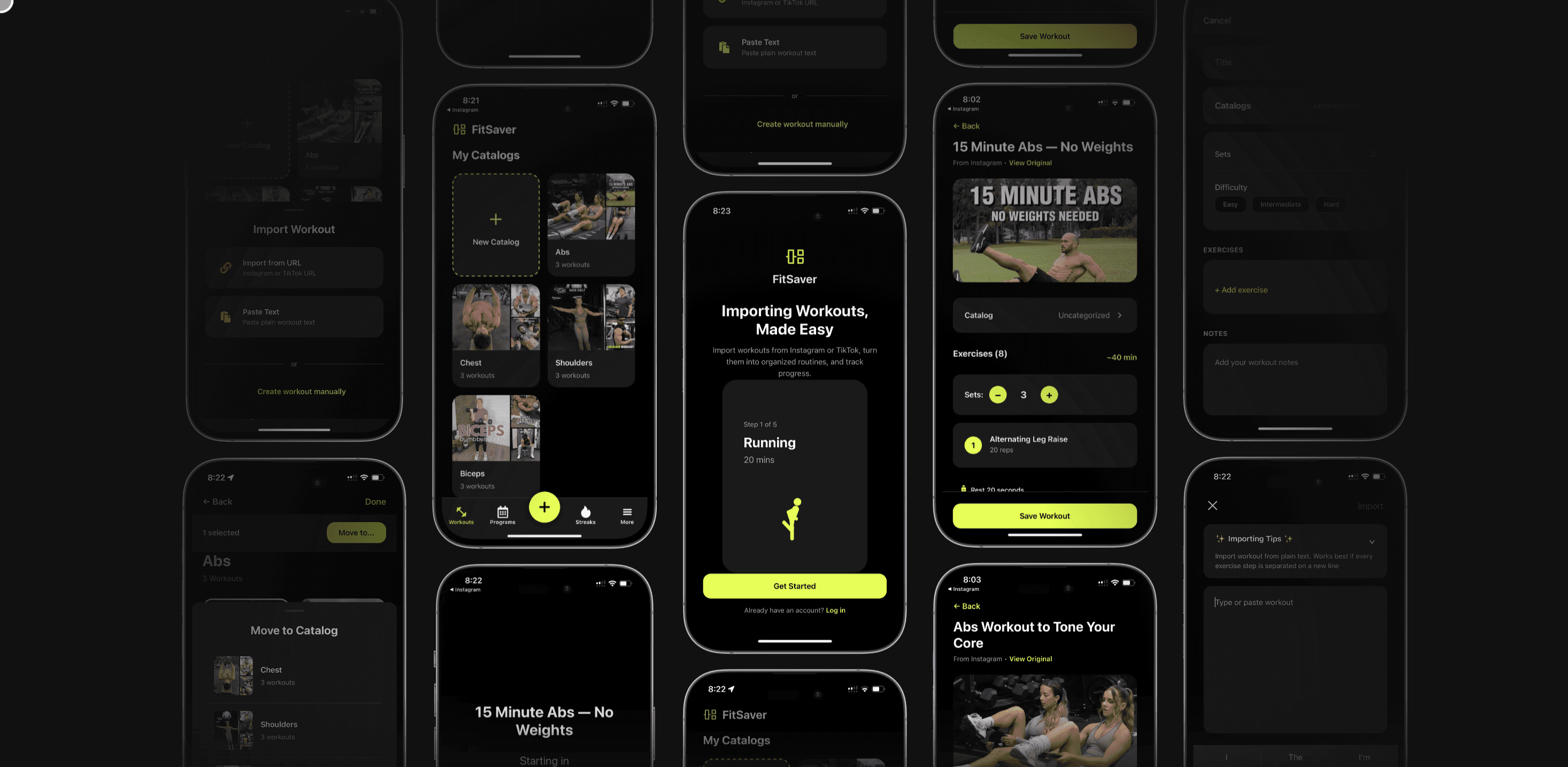
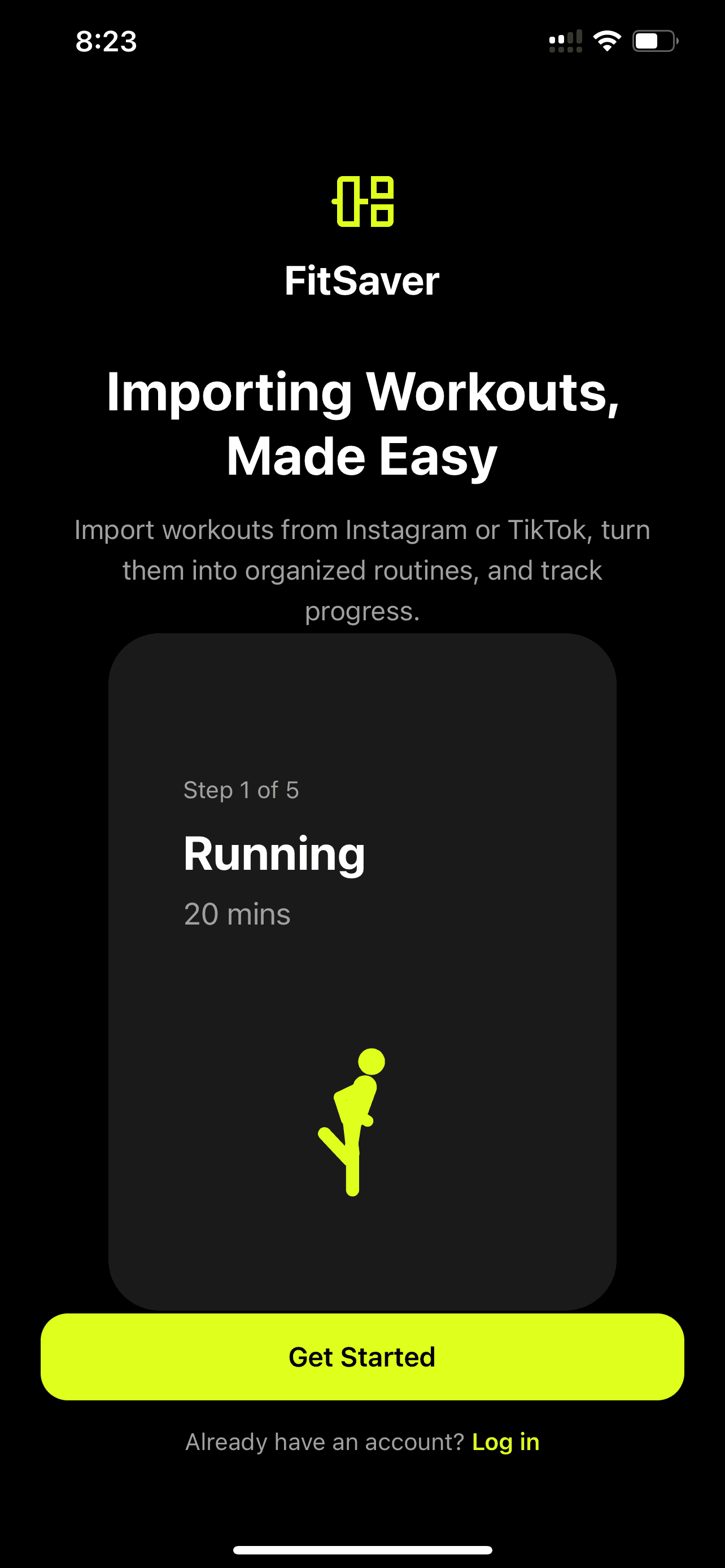
Fitsaver is built for people who find workout ideas on Instagram and TikTok but struggle to turn quick video clips into a replicable routine. The app transforms short social videos into step-by-step plans, complete with timers, sets, reps, and rest intervals. It removes the two biggest annoyances: organizing saved content and building a focused workout out of fragmented clips.
Typical user flow:
Save a handful of exercise videos from social media.
Use Fitsaver to convert those clips into a structured workout with warm-up, main blocks, and cooldown.
Train with in-app timers and distraction-free mode, then log reps, sets, and weights.
Track progress on a calendar and build templates for recurring short and efficient workouts.
For someone who wants a 15-minute strength EMOM they saw in a TikTok, Fitsaver organizes the clip into a clear plan, adds a timer, and logs results so the user can beat their previous score next time.
Common Mistakes to Avoid
Skipping Technique for Speed
Short sessions can tempt people to rush. Proper form must come first. Sloppy repetitions increase injury risk and reduce long-term gains.
Overdoing Intensity Without Recovery
Daily all-out sessions lead to burnout. Mix high-intensity days with mobility or low-intensity sessions to sustain progress.
Chasing Variety Instead of Progress
Trying a new viral routine every day feels fun, but it impedes measurable progress. Stick with a few core templates and adjust progressively.
Science-Backed Tips to Maximize Efficiency
Prioritize sleep: Recovery is non-negotiable; training adaptations happen during rest.
Protein intake: Aim for adequate daily protein to support muscle repair (rough guideline: 0.7–1.0 g/lb bodyweight for active people).
Strategic caffeine: A small dose 30–60 minutes before a short session can boost power output.
Tempo control: Slowing the eccentric phase of lifts increases time under tension without adding lots of volume.
Progress tracking: Improve one metric at a time—more rounds, heavier load, faster time—so progress isn’t ambiguous.
Real-World Example: Turning Saved Videos Into a 20-Minute Routine
Laura, a graduate student, saves workout clips on Instagram during lunch. She enjoys the variety, but her saved folder becomes a chaotic mess. Using a tool that converts videos into routines, she builds a 20-minute full-body circuit from four short clips:
Clip 1: Kettlebell swing (converted into a 40s work / 20s rest block)
Clip 2: Goblet squat (added as strength set: 3x8 in EMOM format)
Clip 3: TRX row (added as a superset for upper back)
Clip 4: Plank variations (2 minutes total as a finisher)
The app sets timers, records the number of rounds Laura completes in a 12-minute AMRAP, and logs the weight used for future sessions. Over six weeks, she increases her kettlebell weight and completes more rounds in the AMRAP—small wins that keep her motivated.
"Short sessions that are planned and logged make progress feel inevitable," Laura says after six weeks—proof that good organization turns random content into real results.
Practical Tips for Busy Days
Schedule workouts like meetings. Treat them as non-negotiable, short appointments.
Stack movement with errands—walk after lunch, do calf raises while cooking.
Use micro-workouts: three 5–7 minute sessions across a day equal a solid 15–20 minute workout when combined.
Keep a “go-to” 12-minute routine for travel or particularly tight days.
When Short Workouts Aren’t Enough
Short and efficient workouts are remarkably versatile, but there are times when longer sessions are preferable:
Training for endurance events (half-marathon, marathon) requires longer runs.
Peak power and maximal strength phases often include longer warm-ups and more volume.
Skill-heavy activities (gymnastics, Olympic lifting) can need longer focused practice sessions.
For most general fitness goals—improved body composition, strength maintenance, better conditioning—short, well-designed sessions are highly effective.
Conclusion
Short and efficient workouts give busy people a practical way to build fitness without sacrificing other priorities. The secret lies in intentional design: prioritizing compound movements, using time-based formats when advantageous, and maintaining consistency. Technology that removes friction—by organizing content, setting timers, and tracking progress—amplifies the benefits. For social media-savvy users who collect quick workout clips, converting those into structured routines bridges the gap between inspiration and measurable progress.
With the right templates, a focus on form, and consistent tracking, short workouts become more than a time-saver: they’re a sustainable fitness strategy. Whether someone has 10 minutes between meetings or 25 minutes before an evening class, a focused session will move the needle. The key is to plan, execute with intent, and log the results so each short workout builds toward long-term goals.
Frequently Asked Questions
Can short workouts build significant muscle?
Yes. Short workouts can build and maintain muscle when they include progressive overload and sufficient weekly volume. Multiple short sessions per week that accumulate the necessary sets and load are effective for hypertrophy—especially when exercises are compound movements and intensity is controlled.
Are 10-minute workouts effective for fat loss?
Ten-minute workouts can contribute to fat loss by increasing daily energy expenditure and improving fitness, but overall calorie balance matters most. Short sessions performed consistently, paired with sound nutrition and added daily movement, will support fat loss over time.
How often should someone do short and efficient workouts?
Frequency depends on goals. For general health, 3–5 short sessions per week work well. For more aggressive fat loss or muscle gain, 4–6 sessions that combine strength and conditioning are common. Recovery and individual capacity should guide frequency.
Can beginners safely do HIIT and Tabata?
Beginners can do modified HIIT and Tabata by lowering intensity, substituting lower-impact movements, and increasing rest. Start with shorter intervals and fewer rounds, then scale up as fitness improves. Prioritizing form is essential.
How can someone keep progress visible with short workouts?
Track a few clear metrics: number of rounds in AMRAPs, weight lifted, time to complete a circuit, or heart rate recovery. Regularly logging these metrics (daily or weekly) makes improvements concrete and motivates continued consistency.

Twenty minutes of focused effort can produce the same cardiovascular and metabolic benefits as a longer, lower-intensity session—if the time is structured well. For people who juggle work, social life, and endless content feeds, short and efficient workouts deliver tangible progress without hijacking the day. This article breaks down why these sessions work, how to design them, and practical plans that fit a busy lifestyle.
Why Short and Efficient Workouts Work
Physiology: Quality Beats Quantity
Short sessions capitalize on intensity. When exercises are chosen and sequenced to prioritize compound movements and minimal rest, the body responds with adaptations usually associated with longer training. High-intensity efforts increase heart rate, stimulate metabolic shifts (like elevated excess post-exercise oxygen consumption, or EPOC), and recruit a lot of muscle fibers quickly. That combination drives improvements in both conditioning and strength in less time.
Behavior Science: Consistency Over Perfection
People who stick with a habit see results. Short, reliable sessions reduce decision friction—the mental cost of getting started—so workouts happen more often. Habit formation thrives on small wins; a 10–25 minute session is an attainable win most days. Over weeks, regular short workouts compound into significant fitness gains and improved habits.
Energy Management and Cognitive Load
Short sessions are easier to pair with high daily productivity. They’re less likely to clash with priorities and less mentally draining, which keeps motivation high. That means fewer missed workouts and less burnout.
Types of Short and Efficient Workouts
Different formats match different goals, equipment access, and personal preferences. Here are the most effective frameworks for short and efficient workouts.
HIIT (High-Intensity Interval Training)
Short bursts of near-maximal effort followed by rest or low-intensity recovery. Best for conditioning and fat loss.
Typical duration: 10–25 minutes
Example: 30s all-out sprints / 60s walk x 10
Tabata
A specific type of HIIT: 20 seconds work, 10 seconds rest, repeated for 8 rounds (4 minutes total). Great as a finisher or quick conditioning circuit.
EMOM (Every Minute On the Minute)
Complete a set amount of work at the start of every minute. The leftover time is rest. EMOMs enforce pacing and keep intensity steady.
Typical duration: 10–20 minutes
Example: EMOM 12 minutes — Minute 1: 10 kettlebell swings; Minute 2: 8 push-ups; repeat
AMRAP (As Many Rounds/Reps As Possible)
Work continuously for a set time, completing as many rounds or reps of a circuit as possible. AMRAPs are excellent for sustained intensity and measurable progress.
Circuit Training and Supersets
Move through multiple exercises back-to-back with minimal rest. Supersets pair complementary or opposing muscle groups to save time and maintain workload.
Micro Strength Sessions
Short sessions focused on progressive overload—low volume but high quality. Ideal when the goal is strength and muscle maintenance without long gym sessions.
How to Structure a Short and Efficient Workout
Designing short and efficient workouts requires intentional choices. Every minute should count.
1. Start With a Mini Warm-Up (2–5 Minutes)
Dynamic mobility (leg swings, arm circles)
Movement-specific prep (bodyweight squats before weighted squats, hip bridges before deadlifts)
2. Prioritize Compound Movements
Choose multi-joint exercises that work several muscle groups at once: squats, deadlifts, presses, rows, lunges, kettlebell swings. These give the biggest return on time investment.
3. Limit Exercise Variety
Three to six exercises per session is plenty. Too many movements create transition downtime and reduce overall intensity.
4. Use Time Rather Than Sets When Appropriate
Time-based structures (AMRAP, EMOM, Tabata) keep the clock as the driver, simplifying tracking and pushing intensity. They also help when fatigue makes strict repetition goals impractical.
5. Keep Rest Purposeful
Short rest periods maintain metabolic stress and cardiovascular stimulus, but rest must be long enough to maintain form. When the goal is strength, give slightly longer rests (60–90 seconds) between heavy sets.
6. Finish With a Short Cool-Down
Two to five minutes of light movement and stretching aids recovery and mobility. This small habit reduces soreness and helps with long-term consistency.
Short and Efficient Workout Examples
Below are ready-to-use sessions for different goals. Each keeps warm-up and cool-down short but effective. Times assume the warm-up is included.
20-Minute Full-Body HIIT (No Equipment)
Warm-up (3 minutes): Jog in place, arm circles, hip openers
AMRAP 16 minutes:
10 jump squats
10 push-ups (knees OK)
10 walking lunges (5 per leg)
10 mountain climbers (each leg counts as one)
Cool-down (1 minute): Standing hamstring stretch
15-Minute EMOM Strength (Dumbbells)
Warm-up (2 minutes): Band pull-aparts, scapular push-ups
EMOM 12 minutes:
Minute 1: 8 dumbbell goblet squats
Minute 2: 8 dumbbell bent-over rows
Minute 3: 8 dumbbell Romanian deadlifts
Repeat
Cool-down (1 minute): Child’s pose
10-Minute Core Blast
20s on / 10s off Tabata sequence (4 minutes): bicycle crunches + plank hold
AMRAP 6 minutes:
10 Russian twists
10 hollow body rocks
25-Minute Hybrid Strength + Metcon
Warm-up (3 minutes)
Strength Block (12 minutes): 3 rounds — 8 barbell/DB front squats + 6 strict overhead presses (rest as needed)
Metcon (8 minutes): 2 rounds for time — 30s kettlebell swings, 30s burpees, 30s rest
Cool-down (2 minutes)
Programming Short and Efficient Workouts for Different Goals
Short workouts can be tailored for fat loss, muscle gain, strength, or mobility. The rules shift slightly depending on the primary aim.
Fat Loss
Blend resistance and cardio (circuits, HIIT)
Maintain a calorie deficit—training helps preserve muscle
Frequency: 4–6 short sessions per week to boost total energy expenditure
Muscle Gain
Focus on progressive overload (increasing reps, sets, or weight)
Prioritize compound lifts and some isolated movements
Volume matters—multiple short sessions that accumulate weekly volume can support hypertrophy
Strength
Keep sessions short but heavy: fewer high-quality sets with longer rests
3–4 short strength-focused sessions per week work well
Mobility and Recovery
Micro-sessions of 10–15 minutes daily improve joint health
Include foam rolling, dynamic stretches, and targeted mobility drills
Sample Weekly Plans
Here are three templates readers can adapt depending on experience and schedule. Each plan uses short and efficient workouts to produce balanced training.
Plan A — Beginner (20 Minutes, 4 Days)
Day 1: 20-minute full-body circuit (bodyweight)
Day 2: Active recovery or mobility (15 minutes)
Day 3: 20-minute EMOM strength (light dumbbells)
Day 4: 20-minute HIIT (run or row intervals)
Weekend: Optional 20–30 minute walk or yoga session
Plan B — Intermediate (25 Minutes, 5 Days)
Day 1: Strength (EMOM, lower body focus)
Day 2: Short HIIT + core
Day 3: Strength (upper body focus, supersets)
Day 4: Mobility + low-intensity steady state (LISS)
Day 5: Full-body AMRAP
Plan C — Advanced (30 Minutes, 5–6 Days)
Two strength days (heavy, low rep)
Two metabolic conditioning days (HIIT/Tabata)
1–2 accessory/mobility days
Minimal Equipment and At-Home Options
Busy people often need workouts that don’t require a gym. Here are efficient equipment-light options.
Bodyweight
Push-ups, squats, lunges, planks, glute bridges, mountain climbers
Progressions: elevate feet, add pauses, increase tempo variability
Resistance Bands
Great for rows, presses, hip thrusts, banded walks
Light, portable, and ideal for high-rep tempo work
Dumbbells / Kettlebell
Allow for heavier loading in small spaces
Exercises: goblet squat, Romanian deadlift, presses, swings
Tracking Progress and Staying Motivated
Short and efficient workouts are most effective when coupled with consistent tracking and planning. That’s where organization matters.
Log Workouts Consistently
Track time, exercises, weights, reps, and how many rounds were completed. These small datapoints show progress better than vague impressions.
Measure What Matters
For conditioning, use time/distance or heart rate; for strength, track weight and rep increases; for body composition, rely on measurements and how clothes fit rather than daily scale fluctuations.
Use Technology to Remove Friction
Apps that organize routines, set timers, and let users log quickly reduce the mental load of tracking. For people who save workouts from social media, a tool that converts those short IG or TikTok clips into structured routines is especially helpful—no more sifting through saved posts to plan a session.
How Fitsaver App Helps With Short and Efficient Workouts
Fitsaver is built for people who find workout ideas on Instagram and TikTok but struggle to turn quick video clips into a replicable routine. The app transforms short social videos into step-by-step plans, complete with timers, sets, reps, and rest intervals. It removes the two biggest annoyances: organizing saved content and building a focused workout out of fragmented clips.
Typical user flow:
Save a handful of exercise videos from social media.
Use Fitsaver to convert those clips into a structured workout with warm-up, main blocks, and cooldown.
Train with in-app timers and distraction-free mode, then log reps, sets, and weights.
Track progress on a calendar and build templates for recurring short and efficient workouts.
For someone who wants a 15-minute strength EMOM they saw in a TikTok, Fitsaver organizes the clip into a clear plan, adds a timer, and logs results so the user can beat their previous score next time.
Common Mistakes to Avoid
Skipping Technique for Speed
Short sessions can tempt people to rush. Proper form must come first. Sloppy repetitions increase injury risk and reduce long-term gains.
Overdoing Intensity Without Recovery
Daily all-out sessions lead to burnout. Mix high-intensity days with mobility or low-intensity sessions to sustain progress.
Chasing Variety Instead of Progress
Trying a new viral routine every day feels fun, but it impedes measurable progress. Stick with a few core templates and adjust progressively.
Science-Backed Tips to Maximize Efficiency
Prioritize sleep: Recovery is non-negotiable; training adaptations happen during rest.
Protein intake: Aim for adequate daily protein to support muscle repair (rough guideline: 0.7–1.0 g/lb bodyweight for active people).
Strategic caffeine: A small dose 30–60 minutes before a short session can boost power output.
Tempo control: Slowing the eccentric phase of lifts increases time under tension without adding lots of volume.
Progress tracking: Improve one metric at a time—more rounds, heavier load, faster time—so progress isn’t ambiguous.
Real-World Example: Turning Saved Videos Into a 20-Minute Routine
Laura, a graduate student, saves workout clips on Instagram during lunch. She enjoys the variety, but her saved folder becomes a chaotic mess. Using a tool that converts videos into routines, she builds a 20-minute full-body circuit from four short clips:
Clip 1: Kettlebell swing (converted into a 40s work / 20s rest block)
Clip 2: Goblet squat (added as strength set: 3x8 in EMOM format)
Clip 3: TRX row (added as a superset for upper back)
Clip 4: Plank variations (2 minutes total as a finisher)
The app sets timers, records the number of rounds Laura completes in a 12-minute AMRAP, and logs the weight used for future sessions. Over six weeks, she increases her kettlebell weight and completes more rounds in the AMRAP—small wins that keep her motivated.
"Short sessions that are planned and logged make progress feel inevitable," Laura says after six weeks—proof that good organization turns random content into real results.
Practical Tips for Busy Days
Schedule workouts like meetings. Treat them as non-negotiable, short appointments.
Stack movement with errands—walk after lunch, do calf raises while cooking.
Use micro-workouts: three 5–7 minute sessions across a day equal a solid 15–20 minute workout when combined.
Keep a “go-to” 12-minute routine for travel or particularly tight days.
When Short Workouts Aren’t Enough
Short and efficient workouts are remarkably versatile, but there are times when longer sessions are preferable:
Training for endurance events (half-marathon, marathon) requires longer runs.
Peak power and maximal strength phases often include longer warm-ups and more volume.
Skill-heavy activities (gymnastics, Olympic lifting) can need longer focused practice sessions.
For most general fitness goals—improved body composition, strength maintenance, better conditioning—short, well-designed sessions are highly effective.
Conclusion
Short and efficient workouts give busy people a practical way to build fitness without sacrificing other priorities. The secret lies in intentional design: prioritizing compound movements, using time-based formats when advantageous, and maintaining consistency. Technology that removes friction—by organizing content, setting timers, and tracking progress—amplifies the benefits. For social media-savvy users who collect quick workout clips, converting those into structured routines bridges the gap between inspiration and measurable progress.
With the right templates, a focus on form, and consistent tracking, short workouts become more than a time-saver: they’re a sustainable fitness strategy. Whether someone has 10 minutes between meetings or 25 minutes before an evening class, a focused session will move the needle. The key is to plan, execute with intent, and log the results so each short workout builds toward long-term goals.
Frequently Asked Questions
Can short workouts build significant muscle?
Yes. Short workouts can build and maintain muscle when they include progressive overload and sufficient weekly volume. Multiple short sessions per week that accumulate the necessary sets and load are effective for hypertrophy—especially when exercises are compound movements and intensity is controlled.
Are 10-minute workouts effective for fat loss?
Ten-minute workouts can contribute to fat loss by increasing daily energy expenditure and improving fitness, but overall calorie balance matters most. Short sessions performed consistently, paired with sound nutrition and added daily movement, will support fat loss over time.
How often should someone do short and efficient workouts?
Frequency depends on goals. For general health, 3–5 short sessions per week work well. For more aggressive fat loss or muscle gain, 4–6 sessions that combine strength and conditioning are common. Recovery and individual capacity should guide frequency.
Can beginners safely do HIIT and Tabata?
Beginners can do modified HIIT and Tabata by lowering intensity, substituting lower-impact movements, and increasing rest. Start with shorter intervals and fewer rounds, then scale up as fitness improves. Prioritizing form is essential.
How can someone keep progress visible with short workouts?
Track a few clear metrics: number of rounds in AMRAPs, weight lifted, time to complete a circuit, or heart rate recovery. Regularly logging these metrics (daily or weekly) makes improvements concrete and motivates continued consistency.
Twenty minutes of focused effort can produce the same cardiovascular and metabolic benefits as a longer, lower-intensity session—if the time is structured well. For people who juggle work, social life, and endless content feeds, short and efficient workouts deliver tangible progress without hijacking the day. This article breaks down why these sessions work, how to design them, and practical plans that fit a busy lifestyle.
Why Short and Efficient Workouts Work
Physiology: Quality Beats Quantity
Short sessions capitalize on intensity. When exercises are chosen and sequenced to prioritize compound movements and minimal rest, the body responds with adaptations usually associated with longer training. High-intensity efforts increase heart rate, stimulate metabolic shifts (like elevated excess post-exercise oxygen consumption, or EPOC), and recruit a lot of muscle fibers quickly. That combination drives improvements in both conditioning and strength in less time.
Behavior Science: Consistency Over Perfection
People who stick with a habit see results. Short, reliable sessions reduce decision friction—the mental cost of getting started—so workouts happen more often. Habit formation thrives on small wins; a 10–25 minute session is an attainable win most days. Over weeks, regular short workouts compound into significant fitness gains and improved habits.
Energy Management and Cognitive Load
Short sessions are easier to pair with high daily productivity. They’re less likely to clash with priorities and less mentally draining, which keeps motivation high. That means fewer missed workouts and less burnout.
Types of Short and Efficient Workouts
Different formats match different goals, equipment access, and personal preferences. Here are the most effective frameworks for short and efficient workouts.
HIIT (High-Intensity Interval Training)
Short bursts of near-maximal effort followed by rest or low-intensity recovery. Best for conditioning and fat loss.
Typical duration: 10–25 minutes
Example: 30s all-out sprints / 60s walk x 10
Tabata
A specific type of HIIT: 20 seconds work, 10 seconds rest, repeated for 8 rounds (4 minutes total). Great as a finisher or quick conditioning circuit.
EMOM (Every Minute On the Minute)
Complete a set amount of work at the start of every minute. The leftover time is rest. EMOMs enforce pacing and keep intensity steady.
Typical duration: 10–20 minutes
Example: EMOM 12 minutes — Minute 1: 10 kettlebell swings; Minute 2: 8 push-ups; repeat
AMRAP (As Many Rounds/Reps As Possible)
Work continuously for a set time, completing as many rounds or reps of a circuit as possible. AMRAPs are excellent for sustained intensity and measurable progress.
Circuit Training and Supersets
Move through multiple exercises back-to-back with minimal rest. Supersets pair complementary or opposing muscle groups to save time and maintain workload.
Micro Strength Sessions
Short sessions focused on progressive overload—low volume but high quality. Ideal when the goal is strength and muscle maintenance without long gym sessions.
How to Structure a Short and Efficient Workout
Designing short and efficient workouts requires intentional choices. Every minute should count.
1. Start With a Mini Warm-Up (2–5 Minutes)
Dynamic mobility (leg swings, arm circles)
Movement-specific prep (bodyweight squats before weighted squats, hip bridges before deadlifts)
2. Prioritize Compound Movements
Choose multi-joint exercises that work several muscle groups at once: squats, deadlifts, presses, rows, lunges, kettlebell swings. These give the biggest return on time investment.
3. Limit Exercise Variety
Three to six exercises per session is plenty. Too many movements create transition downtime and reduce overall intensity.
4. Use Time Rather Than Sets When Appropriate
Time-based structures (AMRAP, EMOM, Tabata) keep the clock as the driver, simplifying tracking and pushing intensity. They also help when fatigue makes strict repetition goals impractical.
5. Keep Rest Purposeful
Short rest periods maintain metabolic stress and cardiovascular stimulus, but rest must be long enough to maintain form. When the goal is strength, give slightly longer rests (60–90 seconds) between heavy sets.
6. Finish With a Short Cool-Down
Two to five minutes of light movement and stretching aids recovery and mobility. This small habit reduces soreness and helps with long-term consistency.
Short and Efficient Workout Examples
Below are ready-to-use sessions for different goals. Each keeps warm-up and cool-down short but effective. Times assume the warm-up is included.
20-Minute Full-Body HIIT (No Equipment)
Warm-up (3 minutes): Jog in place, arm circles, hip openers
AMRAP 16 minutes:
10 jump squats
10 push-ups (knees OK)
10 walking lunges (5 per leg)
10 mountain climbers (each leg counts as one)
Cool-down (1 minute): Standing hamstring stretch
15-Minute EMOM Strength (Dumbbells)
Warm-up (2 minutes): Band pull-aparts, scapular push-ups
EMOM 12 minutes:
Minute 1: 8 dumbbell goblet squats
Minute 2: 8 dumbbell bent-over rows
Minute 3: 8 dumbbell Romanian deadlifts
Repeat
Cool-down (1 minute): Child’s pose
10-Minute Core Blast
20s on / 10s off Tabata sequence (4 minutes): bicycle crunches + plank hold
AMRAP 6 minutes:
10 Russian twists
10 hollow body rocks
25-Minute Hybrid Strength + Metcon
Warm-up (3 minutes)
Strength Block (12 minutes): 3 rounds — 8 barbell/DB front squats + 6 strict overhead presses (rest as needed)
Metcon (8 minutes): 2 rounds for time — 30s kettlebell swings, 30s burpees, 30s rest
Cool-down (2 minutes)
Programming Short and Efficient Workouts for Different Goals
Short workouts can be tailored for fat loss, muscle gain, strength, or mobility. The rules shift slightly depending on the primary aim.
Fat Loss
Blend resistance and cardio (circuits, HIIT)
Maintain a calorie deficit—training helps preserve muscle
Frequency: 4–6 short sessions per week to boost total energy expenditure
Muscle Gain
Focus on progressive overload (increasing reps, sets, or weight)
Prioritize compound lifts and some isolated movements
Volume matters—multiple short sessions that accumulate weekly volume can support hypertrophy
Strength
Keep sessions short but heavy: fewer high-quality sets with longer rests
3–4 short strength-focused sessions per week work well
Mobility and Recovery
Micro-sessions of 10–15 minutes daily improve joint health
Include foam rolling, dynamic stretches, and targeted mobility drills
Sample Weekly Plans
Here are three templates readers can adapt depending on experience and schedule. Each plan uses short and efficient workouts to produce balanced training.
Plan A — Beginner (20 Minutes, 4 Days)
Day 1: 20-minute full-body circuit (bodyweight)
Day 2: Active recovery or mobility (15 minutes)
Day 3: 20-minute EMOM strength (light dumbbells)
Day 4: 20-minute HIIT (run or row intervals)
Weekend: Optional 20–30 minute walk or yoga session
Plan B — Intermediate (25 Minutes, 5 Days)
Day 1: Strength (EMOM, lower body focus)
Day 2: Short HIIT + core
Day 3: Strength (upper body focus, supersets)
Day 4: Mobility + low-intensity steady state (LISS)
Day 5: Full-body AMRAP
Plan C — Advanced (30 Minutes, 5–6 Days)
Two strength days (heavy, low rep)
Two metabolic conditioning days (HIIT/Tabata)
1–2 accessory/mobility days
Minimal Equipment and At-Home Options
Busy people often need workouts that don’t require a gym. Here are efficient equipment-light options.
Bodyweight
Push-ups, squats, lunges, planks, glute bridges, mountain climbers
Progressions: elevate feet, add pauses, increase tempo variability
Resistance Bands
Great for rows, presses, hip thrusts, banded walks
Light, portable, and ideal for high-rep tempo work
Dumbbells / Kettlebell
Allow for heavier loading in small spaces
Exercises: goblet squat, Romanian deadlift, presses, swings
Tracking Progress and Staying Motivated
Short and efficient workouts are most effective when coupled with consistent tracking and planning. That’s where organization matters.
Log Workouts Consistently
Track time, exercises, weights, reps, and how many rounds were completed. These small datapoints show progress better than vague impressions.
Measure What Matters
For conditioning, use time/distance or heart rate; for strength, track weight and rep increases; for body composition, rely on measurements and how clothes fit rather than daily scale fluctuations.
Use Technology to Remove Friction
Apps that organize routines, set timers, and let users log quickly reduce the mental load of tracking. For people who save workouts from social media, a tool that converts those short IG or TikTok clips into structured routines is especially helpful—no more sifting through saved posts to plan a session.
How Fitsaver App Helps With Short and Efficient Workouts
Fitsaver is built for people who find workout ideas on Instagram and TikTok but struggle to turn quick video clips into a replicable routine. The app transforms short social videos into step-by-step plans, complete with timers, sets, reps, and rest intervals. It removes the two biggest annoyances: organizing saved content and building a focused workout out of fragmented clips.
Typical user flow:
Save a handful of exercise videos from social media.
Use Fitsaver to convert those clips into a structured workout with warm-up, main blocks, and cooldown.
Train with in-app timers and distraction-free mode, then log reps, sets, and weights.
Track progress on a calendar and build templates for recurring short and efficient workouts.
For someone who wants a 15-minute strength EMOM they saw in a TikTok, Fitsaver organizes the clip into a clear plan, adds a timer, and logs results so the user can beat their previous score next time.
Common Mistakes to Avoid
Skipping Technique for Speed
Short sessions can tempt people to rush. Proper form must come first. Sloppy repetitions increase injury risk and reduce long-term gains.
Overdoing Intensity Without Recovery
Daily all-out sessions lead to burnout. Mix high-intensity days with mobility or low-intensity sessions to sustain progress.
Chasing Variety Instead of Progress
Trying a new viral routine every day feels fun, but it impedes measurable progress. Stick with a few core templates and adjust progressively.
Science-Backed Tips to Maximize Efficiency
Prioritize sleep: Recovery is non-negotiable; training adaptations happen during rest.
Protein intake: Aim for adequate daily protein to support muscle repair (rough guideline: 0.7–1.0 g/lb bodyweight for active people).
Strategic caffeine: A small dose 30–60 minutes before a short session can boost power output.
Tempo control: Slowing the eccentric phase of lifts increases time under tension without adding lots of volume.
Progress tracking: Improve one metric at a time—more rounds, heavier load, faster time—so progress isn’t ambiguous.
Real-World Example: Turning Saved Videos Into a 20-Minute Routine
Laura, a graduate student, saves workout clips on Instagram during lunch. She enjoys the variety, but her saved folder becomes a chaotic mess. Using a tool that converts videos into routines, she builds a 20-minute full-body circuit from four short clips:
Clip 1: Kettlebell swing (converted into a 40s work / 20s rest block)
Clip 2: Goblet squat (added as strength set: 3x8 in EMOM format)
Clip 3: TRX row (added as a superset for upper back)
Clip 4: Plank variations (2 minutes total as a finisher)
The app sets timers, records the number of rounds Laura completes in a 12-minute AMRAP, and logs the weight used for future sessions. Over six weeks, she increases her kettlebell weight and completes more rounds in the AMRAP—small wins that keep her motivated.
"Short sessions that are planned and logged make progress feel inevitable," Laura says after six weeks—proof that good organization turns random content into real results.
Practical Tips for Busy Days
Schedule workouts like meetings. Treat them as non-negotiable, short appointments.
Stack movement with errands—walk after lunch, do calf raises while cooking.
Use micro-workouts: three 5–7 minute sessions across a day equal a solid 15–20 minute workout when combined.
Keep a “go-to” 12-minute routine for travel or particularly tight days.
When Short Workouts Aren’t Enough
Short and efficient workouts are remarkably versatile, but there are times when longer sessions are preferable:
Training for endurance events (half-marathon, marathon) requires longer runs.
Peak power and maximal strength phases often include longer warm-ups and more volume.
Skill-heavy activities (gymnastics, Olympic lifting) can need longer focused practice sessions.
For most general fitness goals—improved body composition, strength maintenance, better conditioning—short, well-designed sessions are highly effective.
Conclusion
Short and efficient workouts give busy people a practical way to build fitness without sacrificing other priorities. The secret lies in intentional design: prioritizing compound movements, using time-based formats when advantageous, and maintaining consistency. Technology that removes friction—by organizing content, setting timers, and tracking progress—amplifies the benefits. For social media-savvy users who collect quick workout clips, converting those into structured routines bridges the gap between inspiration and measurable progress.
With the right templates, a focus on form, and consistent tracking, short workouts become more than a time-saver: they’re a sustainable fitness strategy. Whether someone has 10 minutes between meetings or 25 minutes before an evening class, a focused session will move the needle. The key is to plan, execute with intent, and log the results so each short workout builds toward long-term goals.
Frequently Asked Questions
Can short workouts build significant muscle?
Yes. Short workouts can build and maintain muscle when they include progressive overload and sufficient weekly volume. Multiple short sessions per week that accumulate the necessary sets and load are effective for hypertrophy—especially when exercises are compound movements and intensity is controlled.
Are 10-minute workouts effective for fat loss?
Ten-minute workouts can contribute to fat loss by increasing daily energy expenditure and improving fitness, but overall calorie balance matters most. Short sessions performed consistently, paired with sound nutrition and added daily movement, will support fat loss over time.
How often should someone do short and efficient workouts?
Frequency depends on goals. For general health, 3–5 short sessions per week work well. For more aggressive fat loss or muscle gain, 4–6 sessions that combine strength and conditioning are common. Recovery and individual capacity should guide frequency.
Can beginners safely do HIIT and Tabata?
Beginners can do modified HIIT and Tabata by lowering intensity, substituting lower-impact movements, and increasing rest. Start with shorter intervals and fewer rounds, then scale up as fitness improves. Prioritizing form is essential.
How can someone keep progress visible with short workouts?
Track a few clear metrics: number of rounds in AMRAPs, weight lifted, time to complete a circuit, or heart rate recovery. Regularly logging these metrics (daily or weekly) makes improvements concrete and motivates continued consistency.